


5 min read
A creative solution for digital textile printing opens new possibilities
Kyocera's new inkjet digital textile printer, FOREARTH, busts preconceptions in a way that could free fashion from the environmental and economic...
5 min read
Style aficionados considering the environmental impacts of fashion might first conjure a mental image of mountains of discarded clothing. In the U.S. in 2018, 15.4 million tonnes of textiles were produced, and nearly 86% (13.2 million tonnes) were burned or sent to landfill. The fabric used is just the tip of the iceberg: in 2020, each person in the European Union (EU) consumed textiles that required 9,000 litres of water to produce and generated 270kg of CO₂, totalling 121 million tonnes across the region.
The need for change is real, and FOREARTH, Kyocera's revolutionary sustainable inkjet textile printer, offers a technology that could help address the mountains of discarded clothing the fashion industry is leaving behind worldwide. Whilst dramatically reducing water usage and carbon dioxide emissions in textile printing, FOREARTH enables designers to print only what they need, with a short lead time, thereby avoiding inventory surpluses. Who will seize the opportunity FOREARTH offers and take the first step?
|
|
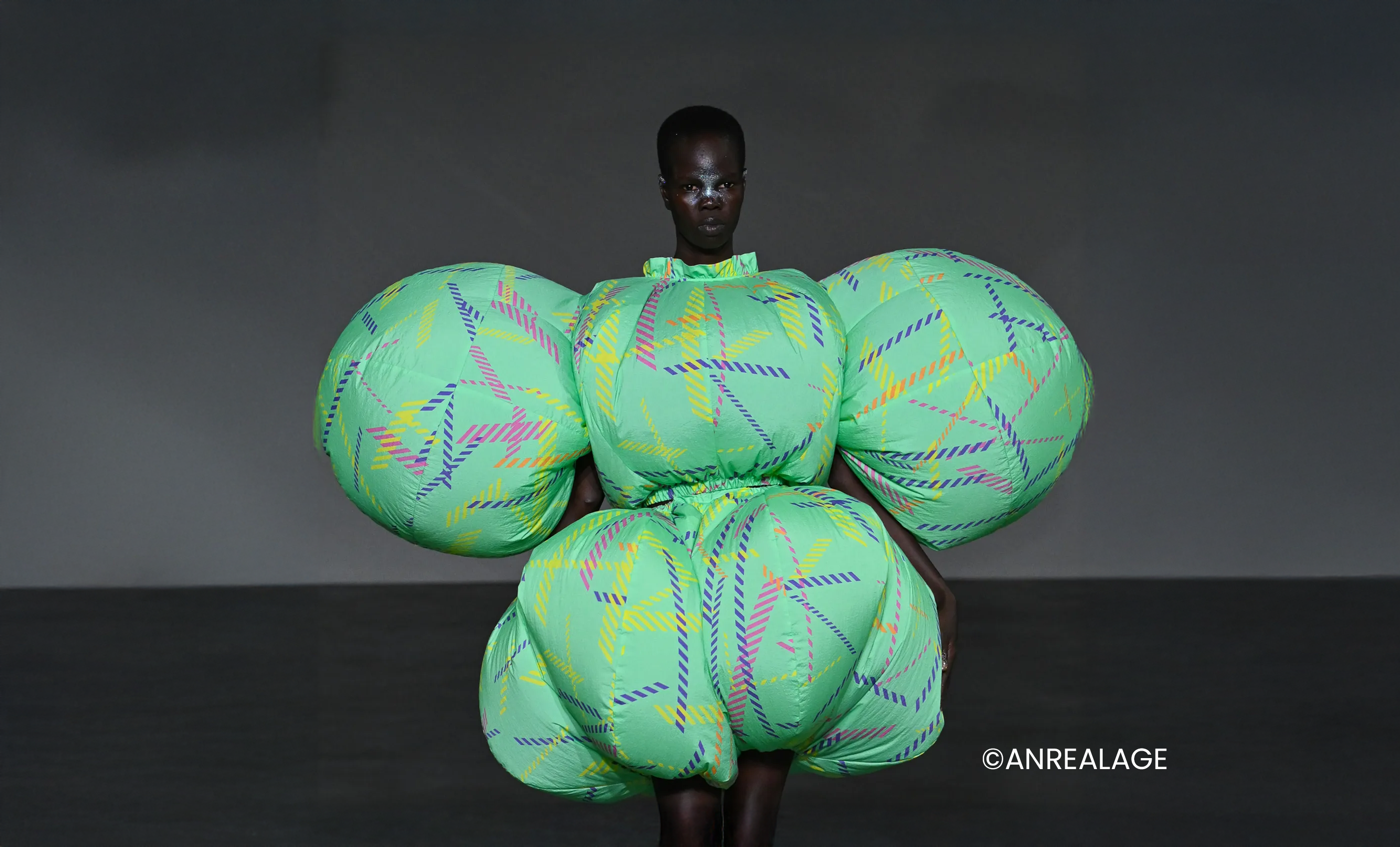
“Designers can use their brand stories to promote sustainability. For us, adopting innovative technologies like Forearth to use waterless printing methods can present consumers with new values and raise environmental awareness.” Kunihiko Morinaga, chief executive and designer, Anrealage |
"It's our responsibility as emerging designers to make a new offer," says Flora Rabitti, the creative director of Florania, a fashion brand she founded in 2021. "Change becomes real if there's demand," she says, "but there must first be an offer: we must create that."
Florania's offer is a gender-neutral clothing range made entirely from certified recycled (GRS) or organic textiles, often featuring vividly coloured, fantastical prints. The designs and the materials evoke the aesthetic of "solarpunk", a genre of science fiction that optimistically imagines a future where humans use technology to live in harmony with nature.
Ms Rabitti, born in 1992, is part of a new generation of fashion designers who are "building a system that is based on resource availability and then design", as she puts it. "The older generation did the opposite: first the design, then the materials, and then they produced. But we cannot do it anymore."
Kunihiko Morinaga, a more established designer who has been a finalist for the LVMH Prize, worked on uniforms for the Japanese pavilion at the Dubai Expo, and designed stage costumes for Beyonce's 2023 world tour, confirms this observation. Though only 12 years older than Ms Rabitti, he says younger designers "have grown up in a society that is increasingly aware of environmental issues, and tend to put sustainability at the centre of their design process". It is not only designers' attitudes that have changed rapidly: "Advances in technology have made it easier to access sustainable materials and manufacturing, which has also influenced their approach."
Mr Morinaga, too, is keenly interested in making creative use of materials to produce garments that are aesthetically and functionally innovative, and sustainable. He established his brand, Anrealage, in 2003, and aims not just to create "beautiful things", but to rethink the manufacturing process.
With an avant-garde aesthetic, Anrealage often makes inventive use of shapes to deliver surprising takes on familiar garments, such as the distinctive "ball shirt", or uses technology in new ways to create startling effects, as in a collection of all-white garments presented at Paris Fashion Week in 2023, which revealed vividly coloured designs when exposed to ultraviolet light. The brand's product range features bags made of patchworks of remnant fabrics, and naturally ventilated clothing that reduces the need for air conditioning.
|
|
“It’s our responsibility as emerging designers to make a new offer. Change becomes real if there’s demand, but there must first be an offer—we must create that.” Flora Rabitti, founder and creative director, Florania |
Aside from their belief in the power of design to bring about change, Ms Rabitti and Mr Morinaga are united by their experience of collaborating with Kyocera, a Japanese firm that has created FOREARTH, a revolutionary inkjet textile printer that could have a dramatic impact on the sustainability of the fashion industry.
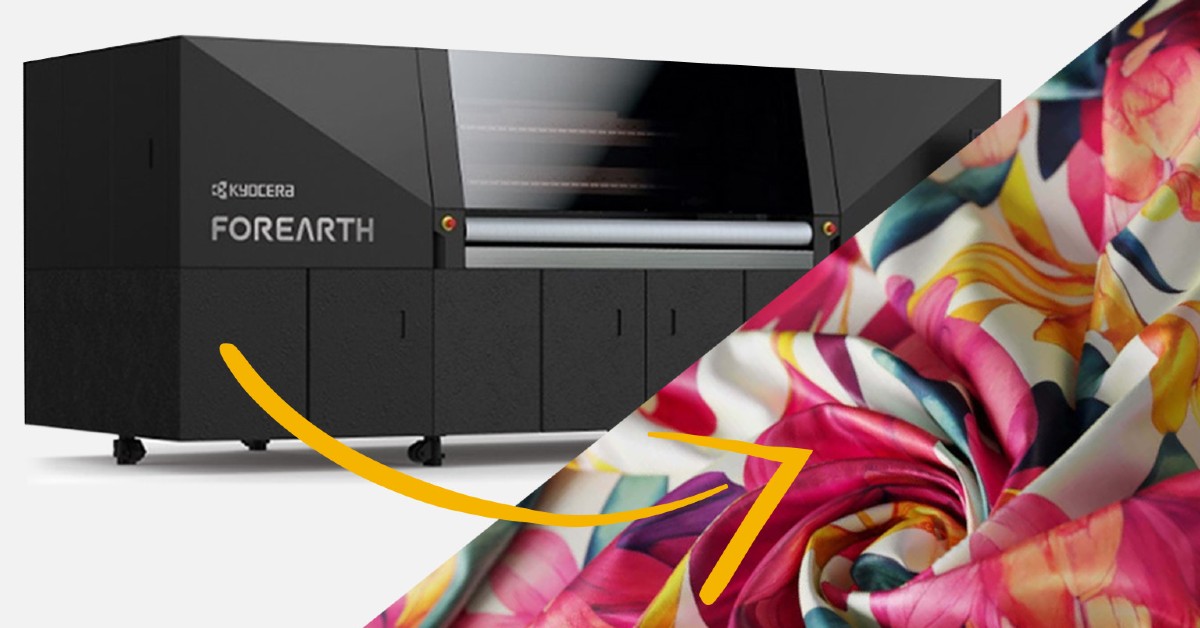
FOREARTH uses advanced inkjet technology to print only the amount of fabric you need, when you need it, and significantly reduces water usage compared to traditional analogue textile printing. By discharging proprietary pigment ink, pre-treatment liquid and finishing agent in the same sequence, the original softness of the fabric is maintained, achieving what the industry calls "soft hand-feel".
"It had been very difficult... using innovative fibres like recycled materials, because they have printing issues," says Ms Rabitti. That changed when a Japanese friend introduced her to Kyocera at a print fair in Milan, because FOREARTH "can print all kinds of innovative fibres". This encounter led to collaborations including the showcasing of fabrics she designed, printed using FOREARTH, in the Milan Fashion Week 24 Spring/Summer Collection in September 2023.
Mr Morinaga is poetic in describing his use of FOREARTH to produce clothes based on the concept of "wind" for Paris Fashion Week. They "were equipped with fans which could send air into the clothes", he explains. "I created graphic designs that allow petals to dance in floral patterns, and even polka dots, checks, houndstooth and tartans that dance freely." Creating this effect took a fabric that would still be thin and airy after printing. "With Forearth we have been able to produce a light, flexible and supple texture," he says.
Mr Morinaga is also enthusiastic about FOREARTH's ability to save water: it uses just 0.02 litres to print 1kg of fabric, a reduction of more than 99.98% over traditional printing methods that require washing and steaming.
FOREARTH's water-saving features, and the ability to print on recycled materials, help to address fashion's significant environmental impacts from fabric production and water use in printing. Environmental gains from the technology could help to change consumer attitudes, Mr Morinaga hopes.
"Designers can use their brand stories to promote sustainability," he says. "For us, adopting innovative technologies like Forearth to use waterless printing methods can present consumers with new values and raise environmental awareness." These conscious design choices will lead consumers to changed values and behaviour, he believes. "Designers can contribute to the spread of sustainable fashion by being aware of their responsibility and taking a creative approach with an eye to the future."
Ms Rabitti also looks further ahead when thinking about changing buyers' mindsets. "We have to get to where responsibility is seductive," she says. Along with storytelling, the beauty of her designs is one of her most powerful tools. "People are reaching to us for our aesthetics," she says. Once customers make that initial move towards a brand, designers can then take them on a journey of sustainability.
Kyocera's commitment to sustainable textile printing extends beyond technology. In April 2025, we opened the FOREARTH Experience Studio in Milan, Italy, a showroom in the heart of Milan's fashion district where visitors can experience FOREARTH firsthand. The studio offers live demonstrations and sample printing, allowing guests to explore sustainable textile printing and see the technology in action.
FOREARTH has already made its mark on the global fashion stage, with collaborations at Paris Fashion Week showcasing how sustainable printing can meet the highest standards of haute couture. From vibrant artwork reproductions to innovative wind-themed collections, FOREARTH continues to demonstrate that sustainability and creativity are not just compatible, they are the future of fashion.
By choosing FOREARTH, fashion brands can dramatically reduce their environmental footprint whilst maintaining the quality, versatility and creative freedom that modern design demands. The technology supports printing on a wide range of fabrics including cotton, silk, polyester, nylon and blended materials, making it the perfect solution for brands committed to both sustainability and excellence.
1. Nikita Shukla, “Fast Fashion Pollution and Climate Change”, Earth.org, February 21st 2022
2. United States Environmental Protection Agency, “Textiles: Material-Specific Data”, November 8th 2024. Figures have been converted from American short tons to tonnes (aka metric tons).
3. European Parliament, “The Impact of Textile Production and Waste on the Environment”, March 21st 2024
4. Informed by Alma Reyes, “Anrealage: Fashion Between the Real and the Unreal World”, Tokyo Weekender, August 31st 2022, and a survey of the product range available at 2024.
5. “The Collaboration Of Kyocera’s Inkjet Textile Printer FOREARTH And Italian Designer Flora Rabitti Showcased At Milan Fashion Week”, Texintel, accessed October 25th 2024.
6. Based on Kyocera research in 2022
This article was produced by EI Studios for Kyocera Document Solutions. Find out more.
KYOCERA Document Solutions supports Australian and New Zealand businesses on their digital transformation journey with innovative products and software solutions.
5 min read
Kyocera's new inkjet digital textile printer, FOREARTH, busts preconceptions in a way that could free fashion from the environmental and economic...
.png)
4 min read
After three decades, the ECOSYS concept that drives the sustainable product design of Kyocera’s laser printers is more timely than ever, helping...
4 min read
Over the past two decades, global material consumption has surged dramatically. According to the Global E-waste Monitor 2024, electronic waste has...